What To Expect From Managed IT Support Services in 2026

As we enter another year, executives planning for the foreseeable future might be investigating what they can expect for managed IT support services in 2026.
Managed IT support has been steadily evolving into the new epoch of technological solutions. 2026 promises to be a turning point.
This year, we’re expecting to see more businesses leverage AI and automation, enhance security management and install self-healing IT infrastructures.
We’ll explain all this and more in this article. Not only do we offer advice about the latest technologies, we also answer the questions most IT executives are asking.
Let’s dive in.
Reliability and Business Continuity
Reliability is the single most important outcome of effective IT support.
Businesses want assurance that IT support will keep operations running with minimal disruption. Key concerns include:
- How quickly issues are detected and resolved
- Guaranteed response and resolution times (SLAs)
- Proactive monitoring vs. reactive firefighting
- Downtime prevention and disaster recovery capability
- Business continuity planning and backup strategies
Minimising downtime is a chief concern for IT managers. Managed IT support teams can help you achieve a 99.999% uptime by identifying problems before users experience them.
Armed with proactive 24/7 monitoring tools, we continuously track network performance, server health, application availability, and security events.
Closely linked to this is the expectation of guaranteed response and resolution times, typically defined through Service Level Agreements (SLAs).

Businesses want transparent commitments that specify how quickly IT support teams will respond to incidents and how long resolution should take based on severity.
Clear SLAs provide predictability, accountability, and reassurance that critical systems will be prioritised appropriately during outages or security events.
In 2026, businesses expect IT support services to design infrastructures that increase productivity and stabilise networks.
This includes automated alerts, performance baselining, patch management, capacity planning, and routine health checks.
Proactive IT support reduces the frequency of incidents altogether, rather than simply responding efficiently when things go wrong.
Another critical area is downtime prevention and disaster recovery capability. No system is entirely immune to failure, so businesses want confidence that when disruptions occur, recovery will be fast and controlled.
This includes redundant systems, failover mechanisms, documented recovery procedures, and regular disaster recovery testing. The ability to restore systems quickly can mean the difference between a minor inconvenience and a major operational crisis.
Finally, business continuity planning and backup strategies are central to long-term resilience. Reliable IT support ensures that data is backed up securely, frequently, and in accordance with regulatory requirements.
Just as importantly, cloud backup strategies must be tested and verified. A continuity plan should define how the organisation continues operating during outages, cyber incidents, or infrastructure failures, with IT support playing a central coordinating role.
AI and Automation Will Be Core, Not Optional
We appreciate that people still have long-term concerns about AI, but there is no escaping it. In our opinion, the best approach is to embrace it and use it wisely.
Automation is a good way to start.
Artificial intelligence is not a peripheral enhancement within IT support — it should be a foundational capability.
Businesses increasingly expect IT services to be faster, more accurate, and more predictive than traditional support models can deliver. AI-driven systems now meet these expectations by handling a wide range of support tasks autonomously, reducing human dependency for routine issues while improving overall service quality.

At the front line, AI-powered chatbots and virtual assistants are becoming standard for Level-1 support. Common requests such as password resets, account access issues, software guidance, and basic troubleshooting can be resolved instantly, 24/7, without human intervention.
This dramatically shortens response times and improves user satisfaction, while also lowering operational costs. Rather than waiting in queues, employees receive immediate assistance, enabling them to remain productive.
AI is also transforming the internal mechanics of IT support through smart ticketing systems.
When incidents are logged, AI can automatically summarise the issue, extract key information, and suggest likely resolutions based on historical data.
Tickets are intelligently routed to the most appropriate technician or team, reducing handoffs and misclassification. This improves first-time fix rates and ensures that specialist resources are used efficiently.
Another major advantage lies in predictive analytics. AI systems continuously analyse system behaviour, performance metrics, and usage patterns to detect early warning signs of failure.
Instead of responding after an outage occurs, IT teams can intervene pre-emptively — replacing failing components, adjusting configurations, or scaling resources before users are affected.

Automated remediation further reinforces this shift. Modern platforms can self-heal by automatically restarting services, applying patches, correcting misconfigurations, or rolling back problematic updates without human involvement.
As AI and automation absorb routine operational tasks, your IT team is freed to concentrate on complex problem-solving, system architecture, security strategy, and aligning technology with business objectives.
Consequently, human expertise becomes more strategic, creative, and value-driven.
Security and Risk Management
Cyber risk is now a board-level concern. Businesses want to understand:
- How data, systems, and users are protected
- Cybersecurity capabilities (patching, endpoint protection, threat monitoring)
- Compliance with regulations (GDPR, ISO standards, industry-specific requirements)
- Incident response processes if a breach occurs
- Accountability in the event of failure
Cybersecurity now sits alongside financial, legal, and operational risk. Businesses expect IT support services to demonstrate clear ownership, transparency, and maturity in how digital assets are protected.
At the most fundamental level, executives want assurance that data, systems, and users are consistently protected. This includes layered security architectures that defend against both external threats and internal vulnerabilities.
Managed IT support providers implement a defence-in-depth approach, combining network security, identity management, and continuous monitoring to reduce the likelihood of compromise.
How?
Cybersecurity services include regular patch management to close known vulnerabilities before they can be exploited.
Endpoint protection tools safeguard laptops, servers, and mobile devices against malware, ransomware, and unauthorised access.
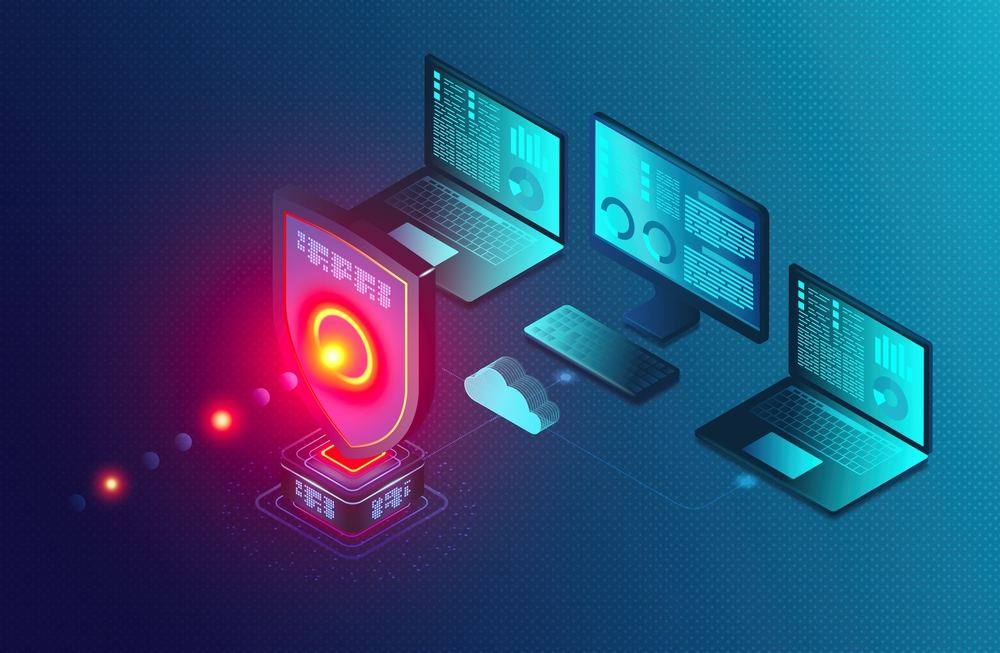
In parallel, threat monitoring and detection systems continuously analyse activity across the environment, identifying unusual behaviour that may indicate an attack in progress.
Compliance is another critical dimension of risk management. Businesses must ensure that their IT support services align with relevant regulatory and industry standards, such as GDPR for data protection, ISO/IEC 27001 for information security management, and sector-specific requirements in healthcare, finance, or education.
IT providers are increasingly expected to offer guidance, documentation, and audit support, helping organisations demonstrate compliance rather than simply claiming it.
Equally important is a clearly defined incident response process. When a security breach occurs, speed, coordination, and communication are crucial.
Businesses are obligated to report data breaches to the Information Commissioner’s Office. A structured incident response plan outlines ICO incident protocols to reduce chaos, limit damage, and support legal and regulatory timelines.
Finally, organisations are asking harder questions about accountability. In the event of a failure — whether a missed patch, a delayed response, or inadequate monitoring — businesses want clarity on responsibility and escalation.
Strong IT support services define ownership, reporting structures, and contractual obligations upfront, ensuring there is no ambiguity when issues arise.
Self-Healing Infrastructure
Self-healing IT infrastructure has shifted from an emerging concept to a strategic expectation among IT executives.
At the centre of this shift is hyperautomation — the orchestration of advanced automation technologies, AI, analytics, and workflow engines to manage IT environments end to end.
Unlike traditional scripting or basic robotic process automation (RPA), hyperautomation enables systems to monitor, diagnose, and remediate issues autonomously, often before users are aware that a problem exists.

A common executive question is: What does “self-healing” actually mean in practice?
Self-healing networks refers to infrastructure that continuously observes system health across networks, servers, cloud platforms, and endpoints.
When anomalies are detected — such as rising memory usage, failed services, degraded performance, or configuration drift — the system correlates this data with historical patterns and predefined logic.
Corrective actions can then be triggered automatically, including service restarts, resource reallocation, patch application, or rollback to a known-good configuration.
This approach significantly reduces mean time to resolution (MTTR) and prevents minor issues from escalating into outages.
Another key concern is reliability and trust in automation. Executives want assurance that automated actions will not introduce new risks.
Mature self-healing environments are therefore built with layered safeguards such as:
- change approval thresholds
- automated testing
- logging, and escalation rules
If an issue falls outside defined parameters or persists after remediation, it is seamlessly handed over to human engineers with full contextual data attached.
Automation augments human decision-making rather than replacing it indiscriminately.
From a business perspective, the value proposition is clear. Downtime is reduced, service availability improves, and operational resilience increases.
Executives also ask how this impacts IT roles. In self-healing environments, the role of IT support professionals evolves.
Teams are responsible for designing reliable automation logic, validating remediation playbooks, and continuously refining workflows based on real-world performance data.
Success depends on governance, observability, and ongoing improvement rather than reactive intervention.
Hyperautomation is not about removing humans from IT — it is about creating intelligent systems that handle routine failure automatically.
Cost, Value, and Predictability
Businesses evaluating managed IT support services in London are no longer focused on finding the lowest-cost provider.
Instead, decision-makers prioritise cost predictability, transparency, and measurable return on investment (ROI).
IT is now a core operational dependency, and unpredictable support costs are viewed as a business risk rather than a budgeting inconvenience.
One of the first questions executives ask is about pricing structure. Fixed pricing models — often delivered through managed service agreements — are attractive because they provide budget certainty.
Monthly, per-user, or per-device fees make costs easy to forecast and align IT spending with headcount or operational scale. Variable or consumption-based pricing, while flexible, introduces uncertainty if not clearly governed.

Businesses increasingly favour hybrid models that offer a stable baseline with clearly defined charges for exceptional or project-based work.
For more information about the benefits of hybrid models, read our breakdown of ‘Why a Hybrid Model is Becoming the Gold Standard for Modern IT Teams.’
Closely related is the issue of what is included and excluded.
Mature buyers expect absolute clarity on the scope of services: monitoring, patching, security, backups, helpdesk support, and strategic advisory.
Ambiguity around exclusions — such as out-of-hours support, cloud cost optimisation, cybersecurity incidents, or major infrastructure changes — often leads to dissatisfaction later.
Another key concern is the presence of hidden costs or usage limits. Businesses want to avoid surprise fees tied to ticket volumes, automation limits, or “fair use” clauses that only become visible during periods of high demand.
Predictable IT support means clearly defined service limits, usage thresholds, and escalation processes that are documented and reviewed regularly.
Executives also increasingly weigh the cost of downtime against the cost of support. The financial impact of system outages — lost productivity, reputational damage, regulatory exposure, and missed revenue — often far exceeds the price of a robust support contract.
As a result, organisations view proactive monitoring, self-healing infrastructure, and rapid incident response as cost-avoidance mechanisms rather than expenses.
Finally, businesses want reassurance around scalability. As organisations grow, merge, or adopt new technologies, IT support costs should scale logically rather than exponentially.
MicroPro designs pricing models and service architectures that expand smoothly with business needs, avoiding disruptive renegotiations or step-change cost increases.
Managed IT Support Services in London
For businesses operating in London, Kent, Hampshire and Surrey, fast-paced, high-risk digital environments can be difficult to navigate alone.
The managed IT support services we provide at MicroPro are far more than technical assistance. We offer stability, foresight, and strategic partnership.
As IT infrastructure becomes increasingly automated, security-driven, and business-critical, it is understandable that board executives need providers who understand both technology and commercial reality.
If you’re looking to work with a managed IT support service partner, we recommend working with a company that delivers predictable costs, assures resilient systems, and provides proactive risk management.
MicroPro has more than 20 years of experience in helping businesses in London, Kent, Hampshire and Surrey grow by using advanced strategies and leading tools.